

News and Statements
UKRPEC Statement following the discussion of the consolidated version of the draft law
“On Packaging and Packaging Waste” in the Competent Committee of the Verkhovna
Rada.
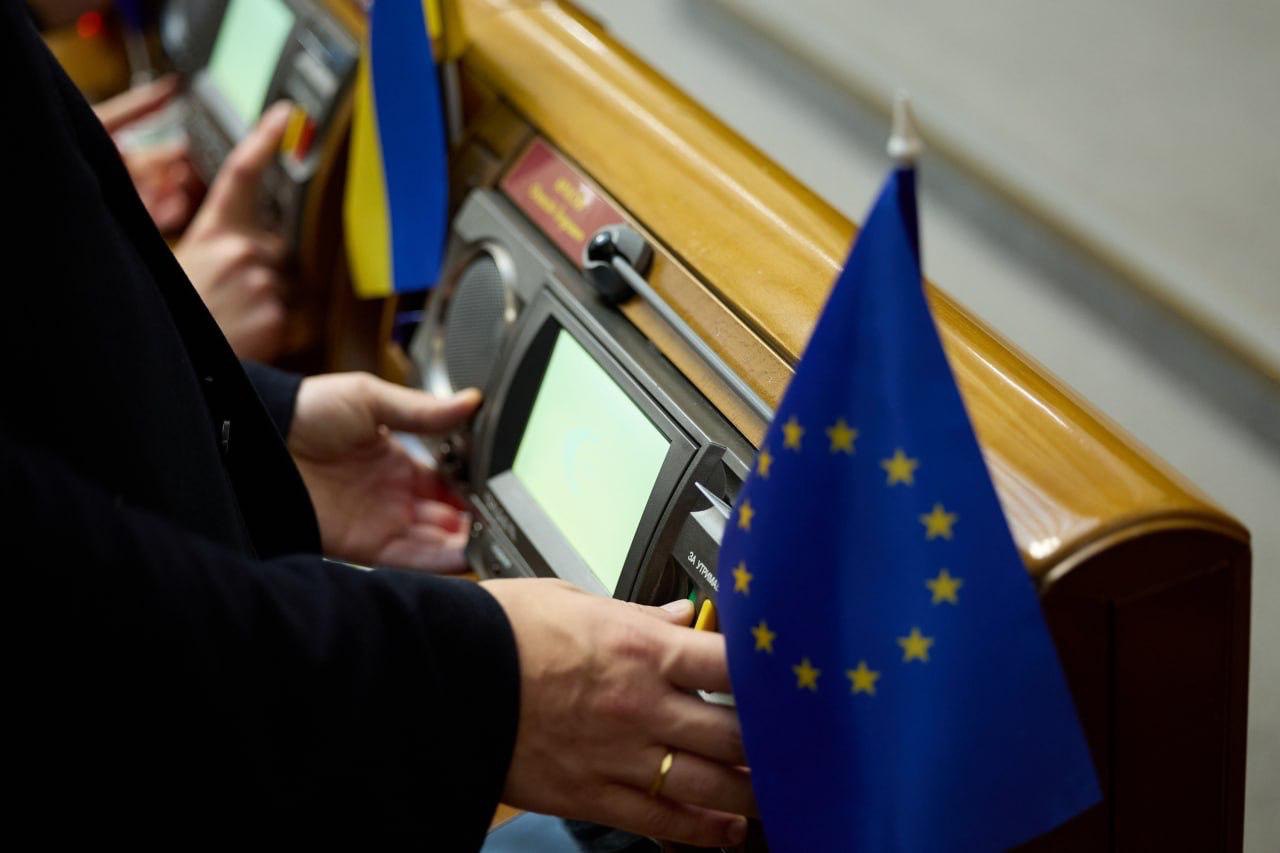
The Ukrainian Packaging and Environmental Coalition took part in a series of thematic online
meetings held in September-October at the initiative of the Verkhovna Rada Committee on
Environmental Policy and Nature Management.
The discussions focused on developing a consolidated version of the Draft Law of Ukraine “On
Packaging and Packaging Waste” in the context of aligning national legislation with the legal
field of the European Union.
The events were co-organized by the NGO “Pragma” and the project “United for the
Community”, implemented by ISAR Yednannia with financial support from the European Union.
A key focus of the discussion was the integration of the requirements of the EU Packaging and
Packaging Waste Regulation 2025/40 (PPWR) into the updated version of the draft law.
Participants examined the main issues related to the introduction of the European model of
packaging waste management in Ukraine: extended producer responsibility (EPR), functioning
of organizations EPR, recycling targets by packaging types and categories, deposit systems,
packaging reuse and refill systems. The meetings also addressed cooperation between EPRs
and local authorities, as well as EU requirements for packaging and labeling.
It is expected that the proposals and comments expressed during the discussions will be taken
into account in preparing the new version of the Draft Law “On Packaging and Packaging
Waste.”
Representatives of the parliamentary committee noted that the updated draft will be published
and reviewed at a committee meeting in December, and shortly thereafter the Parliament should
vote on it in the first reading.
UKRPEC’s position
Based on the outcomes of the discussions, the Coalition — acting as an authorized
representative of the industry — formulated the following key positions:
- Adaptation period. Implementing the Regulation’s requirements in Ukraine will require
a lengthy transition period. EU countries have been working on integrating EPR
principles and the circular economy for decades — and even for them, the new rules
remain a serious challenge. Ukraine is currently at the starting point of this process, so
meeting some of the requirements is objectively impossible at this stage. - Packaging characteristics. New rules regarding packaging properties and the
materials used for packaging must be discussed and agreed upon with domestic
manufacturers. Without this, there is a real risk that certain segments of Ukrainian
industry could halt production. (UKRPEC is currently working to establish effective
communication channels between packaging producers and policymakers.) - Realistic recycling targets. At the initial stage of reform, recycling targets should not
exceed 10%. (This view was fully supported by all meeting participants.) - Legal uncertainty of the EPR system. Current Ukrainian law does not define the term
“extended producer responsibility (EPR) system/scheme” (as required by the EU Waste
Framework Directive — Directive 2008/98/EC, Article 3, Paragraph 21). Without such a
provision, it is impossible to fully transfer responsibilities for packaging waste
management from local governments to the organization EPR. Its absence also prevents
producers from legally including waste management costs in product pricing. This legal
gap must be eliminated. - Threshold for establishing an EPR. The right to establish a separate EPR should
belong to producers who collectively place at least 30% of packaging on the market.
Reducing the threshold (e.g., to 5%, as some participants proposed) would lead to
excessive market fragmentation and the emergence of dozens of small PROs unable to
invest effectively in separate collection infrastructure. It would also increase the risk of
secondary trading of collected materials. The threshold proposed by the Coalition would
limit the number of PROs in Ukraine to no more than 1-3. - Single PRO for all types of packaging waste. Establishing separate PROs for different
types of packaging is unacceptable. This approach — unprecedented globally — would
make performance monitoring and reporting impossible and would shift the focus toward
only the most profitable packaging types. As a result, a significant share of household
packaging waste would remain outside the EPR system due to lack of economic appeal.
Under such conditions, building a single efficient national EPR system is impossible. - Cooperation with local authorities. PROs must be required to sign agreements with
local governments. This ensures that the system covers not only commercially attractive
packaging waste, but also household waste. A similar provision already exists in the Law
of Ukraine “On Waste Management.” It is also necessary to ensure that recycling targets
reflect specific obligations for household waste management. - Unified separate collection system under EPR. No other economic entities should
collect packaging waste without coordination with the PRO. Without such a rule, the
EPR system would lose control over key waste streams. The most valuable materials —
essential for financing the national collection and sorting infrastructure — may be
diverted into shadow schemes operated by entities outside the EPR system. Ultimately,
significant volumes of packaging waste would fall beyond the management and
oversight of the system. - Deposit system. This is a supporting tool that should be introduced only after the EPR
system is fully operational and recycling rates reach at least 45%. Premature
implementation could slow the development of the EPR system and is economically
unjustified in current conditions, as it covers only limited volumes and types of waste —
primarily PET bottles and aluminum cans. - Legalization of the packaging waste collection sector. The reform must be
accompanied by the legalization of independent waste collection activities. This would
formalize the work of thousands currently operating in the sector, create new jobs,
increase transparency, and ensure proper labor conditions and social protection.
The series of online meetings became an important stage in the joint efforts of public
institutions, the expert community and business representatives to reform the packaging waste
management system in Ukraine — based on the European principles of the circular economy.
The Ukrainian Packaging and Environmental Coalition expresses its gratitude to the Committee
of the Verkhovna Rada of Ukraine on Environmental Policy and Nature Management for the
open discussion format and constructive cooperation. UKRPEC looks forward to continuing this
productive dialogue in the process of preparing the final version of the draft law and expects
that the position of the key stakeholders of the reform — producers of packaging and packaged
goods — will be duly taken into consideration by lawmakers.